Emergency Dentistry in Claremont
Last updated:
Emergency Dentistry in Claremont, CA
Need emergency dentistry in Claremont? Renov Dental Group helps patients with urgent dental concerns such as severe tooth pain, swelling, broken teeth, lost fillings, and other problems that need prompt attention. If you are unsure whether your symptoms require immediate care, our team can help you understand what may be happening and what the next step should be.
Emergency dentistry is meant to relieve pain, evaluate the problem, and stabilize the area when possible. Depending on your situation, treatment may be temporary or may lead to follow-up care. Because every case is different, the best approach depends on your symptoms, exam findings, and overall dental health.
FAQ
What counts as a dental emergency?+
A dental emergency usually involves severe pain, swelling, bleeding that will not stop, a knocked-out or broken tooth, or a restoration that has come loose. If you are unsure, it is best to call and describe your symptoms.
What should I do if I have a knocked-out tooth?+
Handle the tooth carefully by the crown, not the root. If possible, place it back in the socket or keep it in milk or saliva and contact our office right away. Time matters, so prompt care is important.
Can you help with severe tooth pain or swelling?+
Yes. Severe pain or swelling may be a sign of infection, injury, or another urgent issue that should be evaluated promptly. We can assess the area and discuss the most appropriate treatment options.
Should I go to the ER or a dental office?+
If you have trouble breathing, rapidly spreading swelling, or uncontrolled bleeding, seek emergency medical care. For most tooth-related emergencies, a dental office is the right place to start.
What can I do at home before my appointment?+
You can rinse gently with warm salt water, avoid chewing on the affected side, and use over-the-counter pain relief only as directed on the label if appropriate for you. Do not place aspirin directly on the gums or tooth.
Will my emergency visit fix everything in one appointment?+
Not always. Emergency care often focuses on relieving pain, stabilizing the area, and addressing the immediate problem. Some cases need follow-up treatment after the urgent issue is managed.
When to Seek Emergency Dental Care
You should contact a dentist promptly if you have sudden tooth pain, facial swelling, a broken or cracked tooth, bleeding that does not stop, or a restoration that has fallen out. These symptoms may point to an infection, injury, or another issue that should be evaluated without delay.
Even if the pain comes and goes, the underlying problem may still need treatment. In some cases, swelling or sensitivity can worsen quickly, so it is best not to wait and see if symptoms improve on their own. Individual situations vary, and the right response depends on the cause, severity, and how long the symptoms have been present.
If you are unsure whether your concern is urgent, call our office for guidance. We can help you determine whether you should come in for an emergency evaluation.
What to Expect at Your Visit
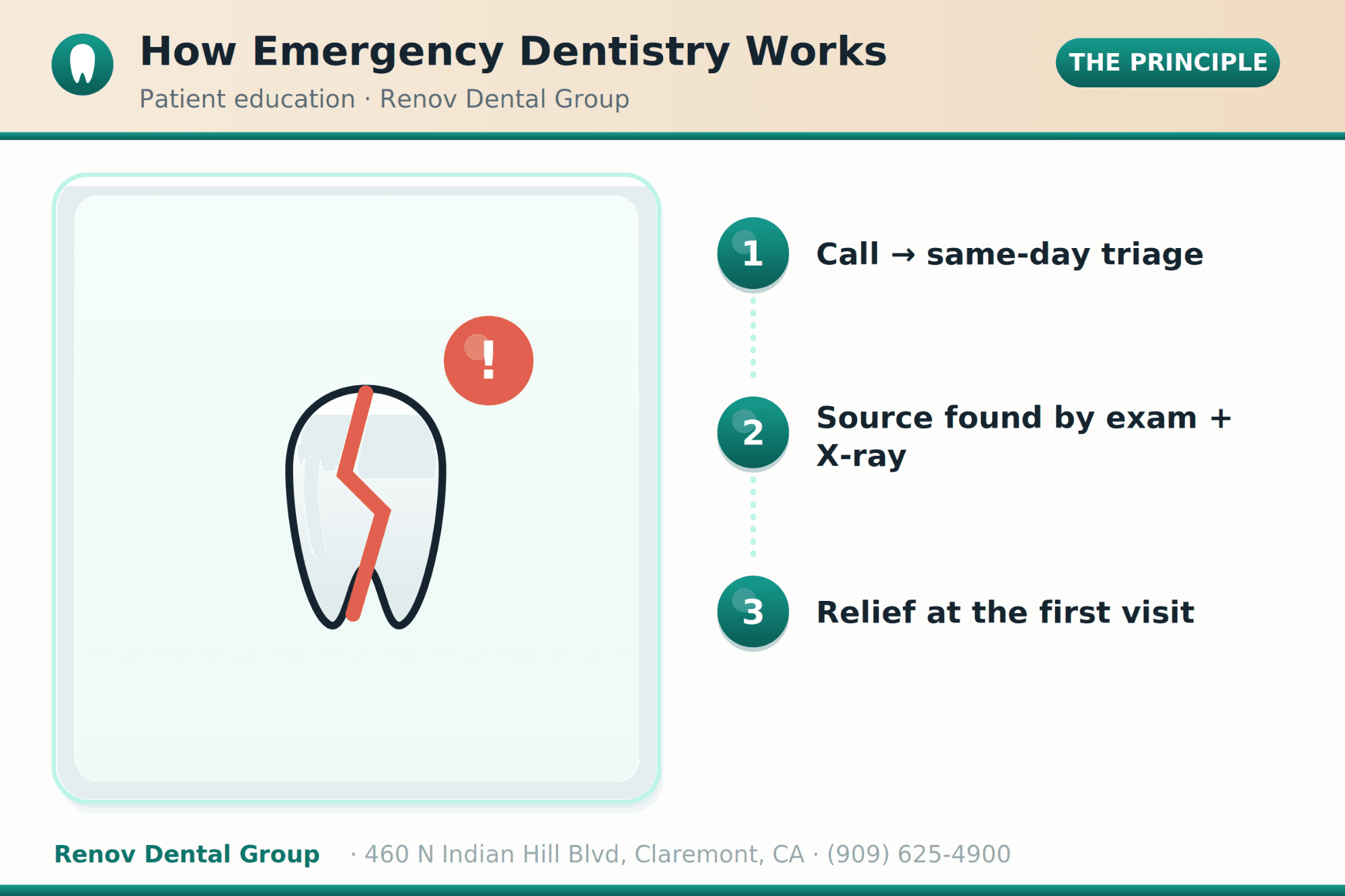
During your emergency appointment, we will first focus on understanding your symptoms and identifying the source of the problem. This may include a dental exam, digital imaging, and a review of your medical and dental history if needed.
From there, we will discuss the most appropriate next steps, which may include temporary relief, stabilization, or a treatment recommendation based on your condition. Depending on the issue, emergency care may involve managing pain, protecting a damaged tooth, addressing infection concerns, or planning follow-up treatment.
Because every case is different, the exact treatment plan and recovery timeline can vary. Our team will explain your options clearly so you know what to expect before moving forward.
Who Emergency Dentistry Is For
Emergency dentistry is for patients who are dealing with sudden dental pain, trauma, swelling, bleeding, or a restoration that has failed. It may also be appropriate if you have a tooth that feels loose, a lost crown or filling, or a concern that is making it difficult to eat, sleep, or function comfortably.
This type of care is meant to address urgent problems that should not wait for a routine appointment. If you are unsure whether your symptoms qualify, it is better to call and ask rather than delay care.
What Emergency Dental Care May Include
Depending on the cause of your symptoms, emergency dental care may include a dental exam, digital imaging, pain management, temporary stabilization, treatment for infection concerns, or repair of a damaged restoration. If a tooth has been knocked out, cracked, or loosened, we will evaluate the area carefully and discuss the most appropriate option for your situation.
In some cases, emergency care focuses on relieving discomfort and protecting the tooth until a more complete treatment can be completed. The exact approach depends on the condition of the tooth, the severity of the problem, and whether additional care is needed after the urgent issue is addressed.
Important Limitations and Cautions
Emergency dentistry is designed to address urgent symptoms and stabilize the problem, but it may not fully resolve the underlying issue in a single visit. Some conditions require additional treatment after the emergency is managed.
Symptoms, healing, and treatment needs can vary from patient to patient. In some cases, pain or swelling may improve quickly, while in others, follow-up care is needed to complete treatment. If you have fever, trouble breathing, or rapidly worsening swelling, seek immediate medical attention.
Need Emergency Dental Care in Claremont?
If you are dealing with a dental emergency, contact Renov Dental Group as soon as possible. Prompt evaluation can help us determine the cause of the problem and recommend the most appropriate next step.
Call our Claremont office to speak with our team and arrange urgent care. If you are experiencing severe swelling, uncontrolled bleeding, or difficulty breathing, seek immediate medical help right away. For other urgent dental concerns, our team can help you decide whether you need same-day attention.
Emergency Dental Care Overview
Emergency dentistry focuses on urgent problems that need prompt evaluation, such as severe pain, swelling, trauma, or a damaged restoration. The goal is to relieve discomfort, identify the cause of the problem, and protect the tooth or surrounding tissues when possible.
Because dental emergencies can vary widely, the care plan may be temporary, diagnostic, or treatment-based depending on what is found during the visit. A timely exam can help prevent the issue from getting worse and give you a clearer understanding of your options.