Emergency Dentistry in San Dimas
Last updated:
Emergency Dentistry in San Dimas, CA
Emergency Dentistry in San Dimas, CA | Renov Dental Group
If you need emergency dentistry in San Dimas, Renov Dental Group in Claremont is a nearby option for urgent dental care. Our office on N Indian Hill Blvd is about a 10-minute drive from San Dimas via the 210 freeway or Arrow Hwy, making it easier to get help when a dental problem cannot wait.
Emergency dentistry is meant to address sudden pain, swelling, broken teeth, lost restorations, and other urgent concerns that may worsen without prompt attention. Depending on your symptoms, we may recommend an exam, imaging, pain management, infection control, or temporary stabilization before follow-up care.
Because every situation is different, treatment recommendations depend on the condition of the tooth, surrounding tissues, and your overall oral health. If you are unsure whether your issue is urgent, call our team and we can help you decide what to do next.
FAQ
### What should I do before I get to the office for a dental emergency?+
If possible, rinse gently with warm water, apply a cold compress for swelling, and avoid chewing on the affected side. If a tooth has been knocked out, handle it carefully and call right away for instructions. Do not place aspirin directly on the gums, as that can irritate the tissue.
### Do I need to call ahead for emergency dentistry?+
Yes. Calling ahead helps the team understand your symptoms and prepare for your visit. If you have severe pain, swelling, bleeding, or trauma, call as soon as possible so we can advise you on the next step.
### Can emergency dentistry fix my problem in one visit?+
Sometimes, but not always. Emergency care is often focused on relieving pain, controlling infection, and stabilizing the tooth. Some cases need additional treatment after the urgent issue has been addressed.
### Is swelling in the face or gums a dental emergency?+
It can be. Swelling may be a sign of infection or another urgent problem that should be evaluated promptly. If swelling is severe, spreading, or paired with fever or trouble swallowing, seek immediate care.
### What if my crown, filling, or veneer falls out?+
Save the restoration if you can and call the office for guidance. A lost restoration may expose the tooth to sensitivity, decay, or damage, so it should be evaluated as soon as practical.
### Will I need follow-up treatment after an emergency visit?+
Possibly. Emergency dentistry often addresses the immediate problem first, then a follow-up appointment may be recommended for a more complete repair. The next step depends on the cause and severity of the issue.
What Emergency Dentistry May Include
Emergency dentistry is designed to address urgent dental problems that need prompt attention. It is often appropriate for patients who have severe tooth pain, swelling, a broken or knocked-out tooth, a lost filling or crown, bleeding that does not stop, or signs of infection such as a bad taste, fever, or facial tenderness.
Depending on the situation, an emergency visit may include a clinical exam, digital X-rays, cleaning the affected area, temporary restoration, drainage or infection management, or treatment planning for a more complete repair. The goal is to relieve discomfort, protect the tooth or surrounding tissue, and determine the next best step.
Not every emergency can be fully resolved in one appointment, and some cases require follow-up treatment after the urgent issue is stabilized.
Who Emergency Dentistry Is For
Emergency dentistry is for patients who are experiencing sudden dental pain or a problem that may worsen without prompt care. This can include a toothache that is becoming more intense, swelling in the gums or face, a chipped or fractured tooth, a knocked-out tooth, a lost crown or filling, or bleeding after an injury.
It may also be appropriate if you have pain when biting, sensitivity that feels severe or unusual, or symptoms that suggest infection. In some cases, the issue may not look dramatic but still needs timely evaluation to prevent further damage.
If you are not sure whether your concern is urgent, it is better to call and describe your symptoms than to wait and hope they improve on their own.
What Emergency Dentistry Can and Cannot Do
Emergency dentistry focuses on immediate relief and stabilization, not always a full long-term repair in one visit. Depending on the condition of the tooth and surrounding tissues, treatment may reduce pain, control swelling, protect the area, or temporarily restore function until follow-up care is completed.
In some cases, the emergency visit may identify a problem that requires additional treatment such as root canal therapy, crown replacement, extraction, or periodontal care. Results can vary based on the severity of the issue, how long symptoms have been present, and your individual response to treatment.
As with any dental procedure, there may be temporary soreness, sensitivity, or other side effects after treatment. Our team will explain what to expect and any recommended next steps.
Call for Prompt Emergency Dental Care
If you are in pain or worried about a dental injury, do not wait for the problem to get worse. Contact Renov Dental Group to discuss your symptoms and find out whether you need urgent care.
Our team can help you understand what to do next, whether that means coming in right away or scheduling the soonest appropriate visit. If you have swelling, trauma, bleeding, or severe pain, call as soon as possible so we can guide you on the next step.
Prompt evaluation can help prevent the issue from becoming more complicated, but the right treatment depends on your specific condition and may require follow-up care.
What to Expect During an Emergency Visit
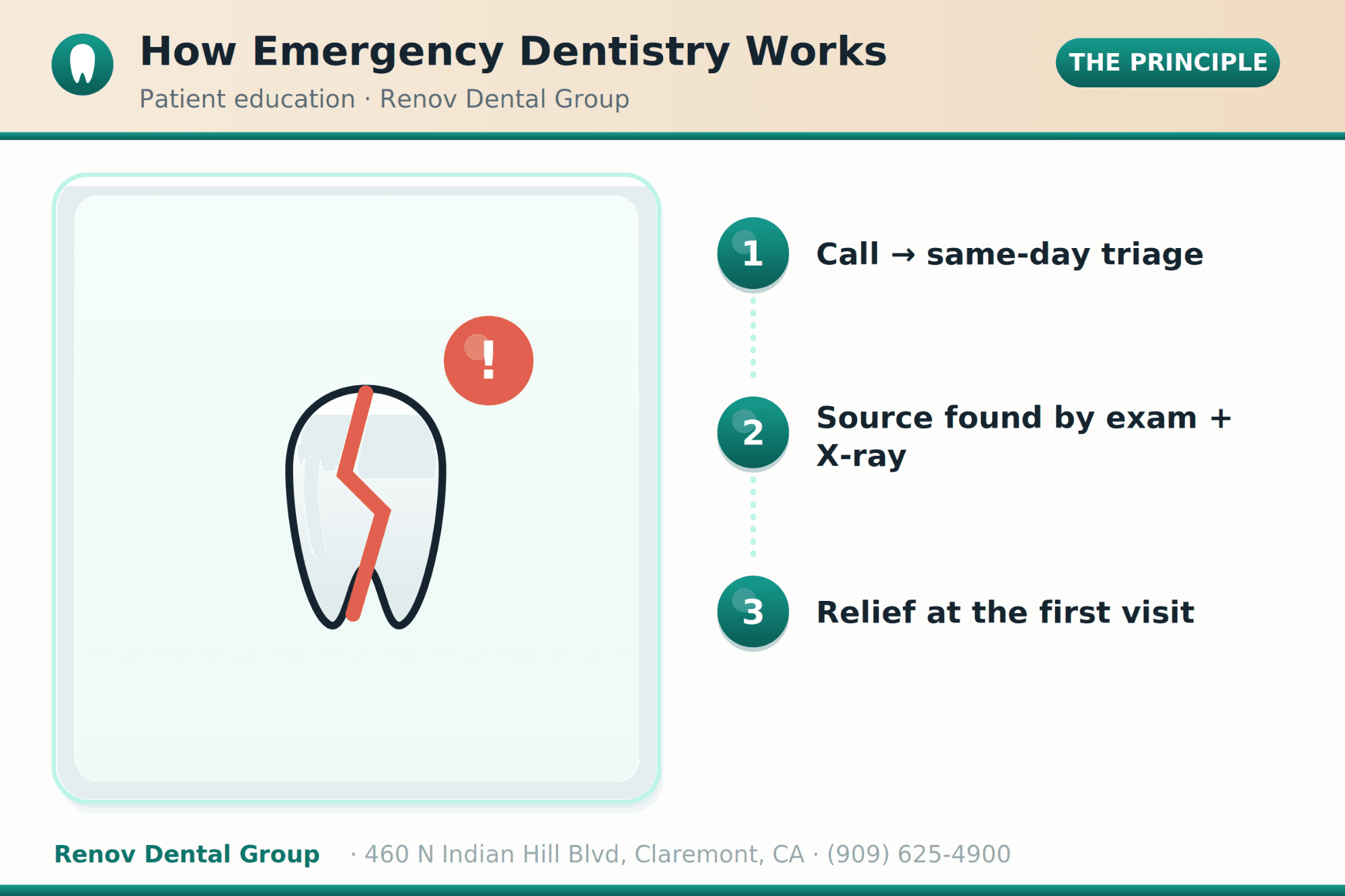
When you arrive for emergency dentistry, the visit usually begins with a focused exam and a discussion of your symptoms, how long they have been present, and whether anything has made them worse. If needed, we may take X-rays to better understand the source of pain or injury.
From there, the dentist will recommend the most appropriate next step, which may include pain relief, cleaning the area, temporary stabilization, infection management, or planning for additional treatment. The exact approach depends on the condition being treated and your overall oral health.
Our goal is to help you feel more comfortable, protect the affected tooth or tissue, and explain what comes next in clear terms.