Emergency Dentistry in Montclair
Last updated:
Emergency Dentistry in Montclair, CA
Emergency Dentistry in Montclair, CA | Renov Dental Group
If you need emergency dentistry in Montclair, CA, Renov Dental Group is here to help with urgent dental problems that need prompt attention. Our office in Claremont is a short drive from Montclair, and we welcome patients who are dealing with pain, swelling, a broken tooth, or another sudden dental concern.
Emergency dental care is designed to relieve discomfort, assess the problem, and help you understand the next best step. Depending on your situation, that may mean same-day evaluation, temporary stabilization, or a plan for follow-up treatment. Because every case is different, the right approach depends on your symptoms, the condition of the tooth or gums, and your overall oral health.
If you are unsure whether your issue needs urgent care, our team can help you decide what to do next.
FAQ
What should I do before I come in for an emergency dental visit?+
If possible, rinse gently with warm water, avoid chewing on the affected side, and bring any broken tooth fragments or restorations with you. Do not place aspirin directly on the gums or tooth.
How do I know if my problem is a true dental emergency?+
Severe pain, swelling, trauma, a knocked-out tooth, uncontrolled bleeding, or signs of infection can all be urgent. If you are unsure, call our office and we can help you decide what to do next.
Can a cracked or broken tooth wait until a regular appointment?+
It depends on the severity. A small chip may be less urgent, but a cracked or painful tooth can worsen quickly and should be evaluated as soon as possible.
What if I have swelling or a possible infection?+
Swelling can signal an infection and should be taken seriously. If the swelling is spreading, or if you have fever, trouble swallowing, or trouble breathing, seek urgent medical care immediately.
Will my emergency visit fix the problem completely?+
Sometimes it will, but not always. Emergency care often focuses on relieving pain, stabilizing the tooth, and planning the next step. Additional treatment may still be needed.
Do you accept PPO dental insurance for emergency visits?+
Many PPO plans are accepted, but coverage depends on your specific plan and the treatment needed. Our team can help you understand your benefits before or during your visit.
Who Needs Emergency Dentistry?
Emergency dentistry is for patients who need prompt evaluation because of pain, injury, swelling, bleeding, or a sudden change in their oral health. It may be appropriate if you have a toothache that is getting worse, a tooth that feels loose, a broken filling, a cracked tooth, or swelling around the gums or jaw.
You should also call for guidance if chewing, speaking, or sleeping has become difficult because of dental pain. Even if the problem seems minor at first, symptoms can change quickly. A timely exam can help determine whether the issue can wait for a regular visit or should be seen sooner.
What Emergency Dentistry May Include
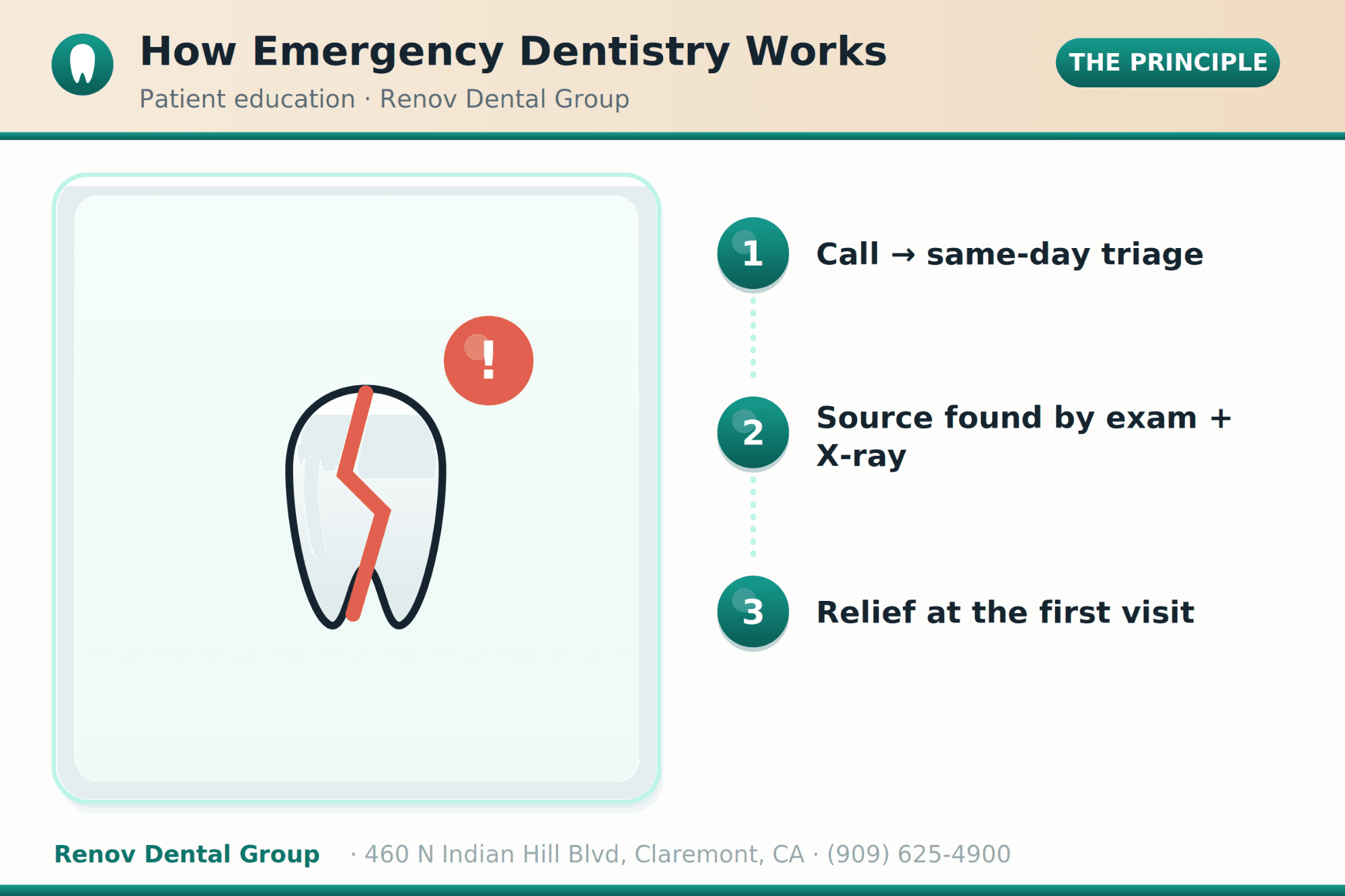
Depending on your symptoms, your emergency visit may include a dental exam, digital X-rays, pain assessment, infection screening, temporary stabilization, or a treatment plan for follow-up care. If needed, we may also address a broken restoration, evaluate a cracked tooth, or provide instructions to help protect the area until definitive treatment can be completed.
The goal of emergency dentistry is to identify the source of the problem and reduce the risk of it getting worse. In some cases, the visit may resolve the immediate concern; in others, it may be the first step toward additional treatment such as root canal therapy, a crown, or extraction. Individual results and next steps vary based on the condition being treated.
When Emergency Care Needs Follow-Up
Some emergency visits solve the immediate issue, while others are only the first step. A tooth may still need root canal therapy, a crown, extraction, or another restorative procedure after the urgent concern is addressed. In some cases, we may recommend monitoring the area before deciding on the next treatment.
Follow-up care is important because pain relief does not always mean the underlying problem is fully resolved. We will explain what we found, what was done during the visit, and what signs to watch for at home. If your symptoms change, worsen, or return, you should contact the office for further guidance.
Contact Our Montclair-Area Team
If you are in pain or worried about a dental injury, contact Renov Dental Group as soon as possible. Our team can help you understand whether your situation needs immediate attention and help you schedule the next available visit.
If you are experiencing swelling, uncontrolled bleeding, or difficulty opening your mouth, call right away so we can advise you on the safest next step. The sooner we hear from you, the sooner we can help you move toward relief and a clear treatment plan.
Important Limitations and When to Seek Medical Help
Emergency dentistry can help with many urgent oral health problems, but it is not a substitute for emergency medical care. If you have trouble breathing, trouble swallowing, chest pain, severe facial swelling, or uncontrolled bleeding, seek immediate medical attention.
Dental treatment can relieve pain and address many urgent concerns, but outcomes vary from patient to patient. Some problems require staged care, and some symptoms may point to a broader medical issue that needs evaluation outside the dental office.
What to Expect From an Emergency Dental Visit
When you contact our office about an urgent dental concern, we will ask about your symptoms, how long the problem has been present, and whether you are experiencing swelling, bleeding, or trauma. This helps us determine how quickly you should be seen.
During the visit, we focus on identifying the source of the problem, relieving discomfort when possible, and explaining your options clearly. If immediate treatment is not the best next step, we will let you know what to do at home and when to return for follow-up care.
What You Can Do Before You Arrive
If you are waiting to be seen, try to keep the area clean and avoid chewing on the affected side. A cold compress may help with swelling, and over-the-counter pain relief may be appropriate for some patients if it is safe for you to take. Do not place aspirin directly on the gums or tooth.
If a tooth has been knocked out or a restoration has come loose, handle the area carefully and bring any tooth fragments or dental work with you if possible. If symptoms become severe, change quickly, or include trouble breathing or swallowing, seek immediate medical care.