Wisdom Teeth Removal in Claremont
Last updated:
Wisdom Teeth Removal in Claremont, CA
Wisdom Teeth Removal in Claremont, CA | Renov Dental Group
Need wisdom teeth removal in Claremont? Renov Dental Group, located on N Indian Hill Blvd, provides evaluation and treatment for patients who are dealing with pain, swelling, crowding, or partially erupted wisdom teeth. If your wisdom teeth are causing repeated irritation or may affect nearby teeth, our team can help you understand whether removal is appropriate for your situation.
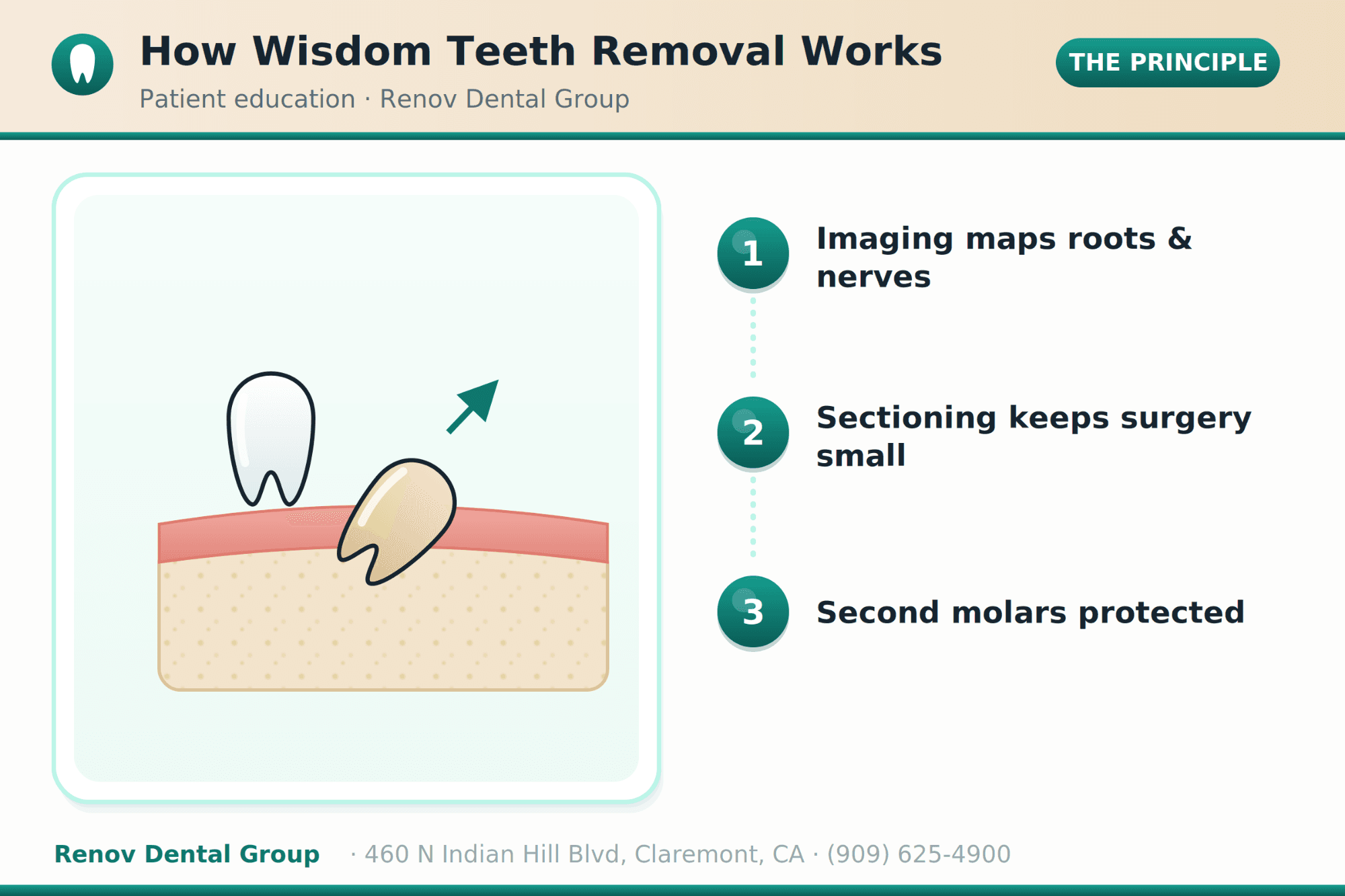
We begin with an exam and imaging when needed, then review your options, expected recovery, and any precautions before treatment. Every case is different, so the recommendation depends on the position of the teeth, your symptoms, and your overall oral health.
FAQ
How do I know if my wisdom teeth need to be removed?+
Common signs include pain, swelling, repeated gum irritation, food trapping, crowding, or difficulty cleaning the back of the mouth. X-rays are often needed to confirm whether removal is recommended.
Is wisdom teeth removal always necessary?+
No. Some wisdom teeth can be monitored if they are fully erupted, healthy, and not causing problems. Your dentist will recommend removal only when it is likely to help protect your oral health or prevent future issues.
What is recovery like after wisdom teeth removal?+
Recovery varies from person to person. Many patients have swelling and soreness for a few days, and healing may take longer if the teeth were impacted or difficult to remove. Your dentist will give you aftercare instructions to support healing.
Do impacted wisdom teeth always cause symptoms?+
No. Impacted wisdom teeth can sometimes remain quiet for a while, but they may still create future problems such as infection, crowding, or damage to nearby teeth. That is why evaluation and imaging are important.
Will I need sedation or anesthesia for the procedure?+
The comfort option depends on your case and the complexity of the extraction. Your dentist will review whether local anesthesia or another option is appropriate and explain what to expect before treatment.
What should I do if I have worsening pain after surgery?+
Mild discomfort is expected, but worsening pain, fever, heavy bleeding, or unusual swelling should be reported to the office. These symptoms may need prompt evaluation.
Can I go back to work or school right away?+
Some patients return quickly, while others need more rest depending on the number of teeth removed and how complex the procedure was. Your dentist will let you know what is reasonable for your situation.
When Wisdom Teeth Removal in Claremont Is Recommended
Wisdom teeth removal is often recommended when the teeth are impacted, partially erupted, difficult to clean, or contributing to pain and inflammation. It may also be considered if the teeth are crowding other teeth, trapping food, or increasing the chance of decay or gum problems.
This treatment is commonly discussed when a wisdom tooth is growing at an angle, pressing on nearby teeth, or causing repeated swelling in the back of the mouth. In some cases, removal is recommended before symptoms become severe, especially if imaging shows that the teeth are likely to create future problems.
Your dentist will evaluate your symptoms, exam findings, and X-rays before making a recommendation.
What to Expect at Your Wisdom Teeth Removal Appointment
Your visit typically starts with an exam and imaging so the dentist can evaluate the position of the wisdom teeth and determine the best treatment approach. If removal is recommended, you will receive a personalized explanation of the procedure, recovery instructions, and any precautions to follow before treatment.
We also review whether local anesthesia or another comfort option is appropriate for your case. If the teeth are impacted or close to important structures, your dentist may discuss whether a referral or a different surgical approach is needed. The goal is to make sure you understand the plan before anything begins.
Recovery, Risks, and Individual Variation
Recovery after wisdom teeth removal can vary depending on the number of teeth removed, whether the teeth are impacted, and your overall health. Temporary swelling, soreness, and limited jaw opening may occur, and your dentist will review how to manage these symptoms. Following aftercare instructions closely can help support healing, but individual recovery times still vary.
As with any oral surgery, there are possible risks such as bleeding, infection, dry socket, or prolonged discomfort. Your dentist will explain what to watch for and when to contact the office. If you develop worsening pain, fever, or unusual swelling, you should reach out promptly for guidance.
Who Wisdom Teeth Removal Is For
Wisdom teeth removal may be appropriate for patients who are experiencing pain, swelling, repeated gum irritation, crowding, or difficulty cleaning the back of the mouth. It is also commonly discussed when wisdom teeth are impacted, partially erupted, or affecting nearby teeth.
Some patients are referred for evaluation even if they do not have major symptoms yet, especially when X-rays show limited space or a high chance of future complications. In other cases, monitoring may be more appropriate if the teeth are fully erupted, healthy, and easy to clean. Your dentist will help determine which option fits your case.
What’s Included in Wisdom Teeth Removal Care
Your care typically includes an evaluation, imaging when needed, a treatment recommendation, and a discussion of anesthesia or sedation options if removal is planned. You will also receive pre-procedure guidance and aftercare instructions tailored to your case.
If extraction is recommended, the dentist will explain the steps involved, what to expect during healing, and how to reduce the risk of complications. When appropriate, we also review follow-up needs and signs that should prompt a call to the office.
Limitations and Important Cautions
Wisdom teeth removal is not always necessary, and not every patient will need the same treatment approach. Healing time, discomfort, and the risk of complications can vary based on the position of the teeth, the complexity of the extraction, and your overall health.
As with any oral surgery, there may be temporary side effects such as swelling, bruising, bleeding, or soreness. In some cases, impacted teeth may be closer to nerves or sinuses, which can affect the treatment plan. Your dentist will review these considerations with you so you can make an informed decision.
Schedule a Wisdom Teeth Evaluation in Claremont
If you are dealing with pain, swelling, or questions about whether your wisdom teeth should be removed, a consultation can help clarify your options. Renov Dental Group can evaluate your teeth, review imaging when needed, and explain whether monitoring or removal is the better next step.
If treatment is recommended, we will also walk you through the procedure, recovery expectations, and any precautions based on your case. Contact our Claremont office to schedule an evaluation and get a personalized recommendation.