Wisdom Teeth Removal in Montclair
Last updated:
Wisdom Teeth Removal in Montclair, CA
Wisdom Teeth Removal in Montclair, CA | Renov Dental Group
Searching for trusted wisdom teeth removal in Montclair? Renov Dental Group, located on N Indian Hill Blvd in Claremont — about a 5-minute drive from Montclair via Central Ave or the I-10 — provides evaluation and treatment for impacted or problematic wisdom teeth. If your third molars are causing pain, swelling, crowding, or repeated irritation, an exam can help determine whether removal is appropriate for your case.
During your visit, the team may review your symptoms, take imaging if needed, and explain whether extraction is recommended now or whether monitoring is a better option. The goal is to give you clear guidance based on your dental condition, not a one-size-fits-all answer.
If you are experiencing discomfort or have been told your wisdom teeth may need attention, schedule a consultation to discuss your options and next steps.
FAQ
How do I know if my wisdom teeth need to be removed?+
Common signs include pain, swelling, gum irritation, repeated infections, crowding, or difficulty cleaning the area. In some cases, wisdom teeth are removed even before symptoms become severe if imaging shows they are likely to cause problems later.
What happens during a wisdom teeth removal visit?+
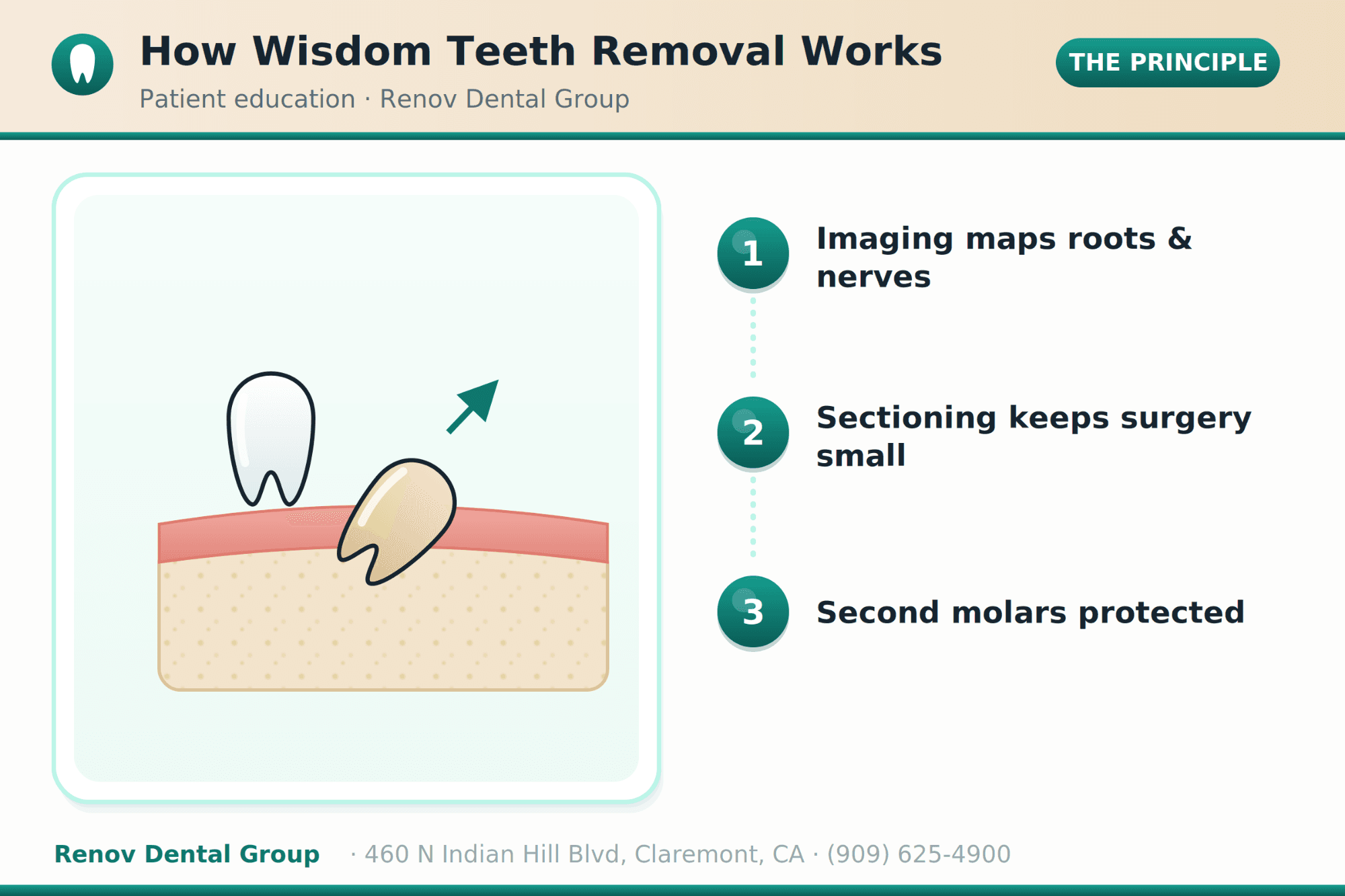
Your visit typically begins with an exam and imaging so the dentist can assess the position of the teeth and surrounding structures. If removal is recommended, the team will review the procedure, aftercare instructions, and what to expect during recovery.
Is wisdom teeth removal painful?+
The procedure is performed with appropriate anesthesia to help keep you comfortable. Some soreness, swelling, or tenderness afterward is common, and recovery experiences can vary from person to person.
How long does recovery usually take?+
Recovery time depends on the complexity of the extraction and how your body heals. Many patients feel better within a few days, but complete healing can take longer. Following aftercare instructions can help support a smoother recovery.
What should I eat after wisdom teeth removal?+
Soft foods are usually recommended at first, such as yogurt, smoothies, soup, mashed potatoes, or applesauce. It is important to avoid hard, crunchy, spicy, or very hot foods until your dentist says it is appropriate.
Are there risks or side effects after extraction?+
As with any procedure, there can be side effects such as swelling, bleeding, discomfort, or delayed healing. Your dentist will review possible risks and provide instructions to help reduce complications and support recovery.
Who May Need Wisdom Teeth Removal
Wisdom teeth removal may be recommended for patients who have pain, swelling, gum tenderness, repeated infections, or teeth that are trapped beneath the gums. It may also be considered when wisdom teeth are crowding nearby teeth, damaging adjacent structures, or making it difficult to keep the area clean.
Some patients do not have obvious symptoms at first, but imaging may show that the teeth are impacted, angled incorrectly, or likely to cause future problems. In those cases, your dentist may discuss whether early removal could help reduce the risk of complications later.
Not every wisdom tooth needs to be removed right away. In some situations, careful monitoring may be appropriate, especially if the teeth are fully erupted, healthy, and easy to clean.
What’s Included in Your Evaluation and Treatment
Your appointment may include a clinical exam, imaging, and a discussion of your symptoms and dental history. If extraction is recommended, the dentist will explain the procedure, anesthesia options, aftercare guidance, and any precautions that may apply to your case.
Depending on the position of the tooth, treatment may be straightforward or may require a more involved surgical approach. Your provider should review what that means for your comfort, recovery, and follow-up care so you know what to expect before moving forward.
The goal is to make sure you understand your options and can make an informed decision based on your needs.
Important Considerations and Recovery Notes
Recovery can vary from patient to patient, and the amount of discomfort or swelling depends on factors such as tooth position and the complexity of the extraction. Some temporary bleeding, soreness, or swelling is common after treatment.
Your dentist may also give specific instructions about rest, diet, oral hygiene, and how to protect the extraction site while it heals. Following these directions can support a smoother recovery, but healing time and comfort levels may differ based on individual factors.
If you notice unusual pain, persistent bleeding, fever, or other concerns after treatment, contact the office promptly for guidance.
Schedule a Wisdom Teeth Consultation in Montclair
If you are dealing with wisdom tooth pain, swelling, or questions about whether removal is necessary, a consultation can help clarify your next step. Renov Dental Group can evaluate your symptoms, review imaging if needed, and explain whether extraction or monitoring is more appropriate.
Because every case is different, the best approach depends on the tooth position, your current symptoms, and your overall oral health. Contact the office to schedule a visit and discuss your options with a dental professional.