Wisdom Teeth Removal in Pomona
Last updated:
Wisdom Teeth Removal in Pomona, CA
Wisdom Teeth Removal in Pomona, CA
If you are searching for wisdom teeth removal in Pomona, Renov Dental Group in nearby Claremont provides evaluation and treatment for patients who are dealing with pain, swelling, crowding, repeated infection, or impacted wisdom teeth. Our team can help determine whether removal is appropriate and review what to expect before, during, and after treatment.
Wisdom teeth do not always need to be removed right away, and in some cases they may be monitored over time. When extraction is recommended, the goal is to reduce the risk of ongoing discomfort, infection, or damage to nearby teeth. Because every patient is different, the best approach depends on the position of the teeth, your symptoms, and your overall oral health.
If you have been told your wisdom teeth may be causing problems, or you are noticing new pain in the back of your mouth, a consultation can help you understand your options.
FAQ
How do I know if my wisdom teeth need to be removed?+
Common signs include pain, swelling, repeated infection, crowding, or difficulty cleaning the back teeth. An exam and X-rays are usually needed to confirm whether removal is the best option.
Do all wisdom teeth have to come out?+
No. Some wisdom teeth can stay in place if they are healthy, fully erupted, and not causing problems. Your dentist will recommend removal only when it is likely to help protect your oral health.
What is the difference between a simple extraction and surgical removal?+
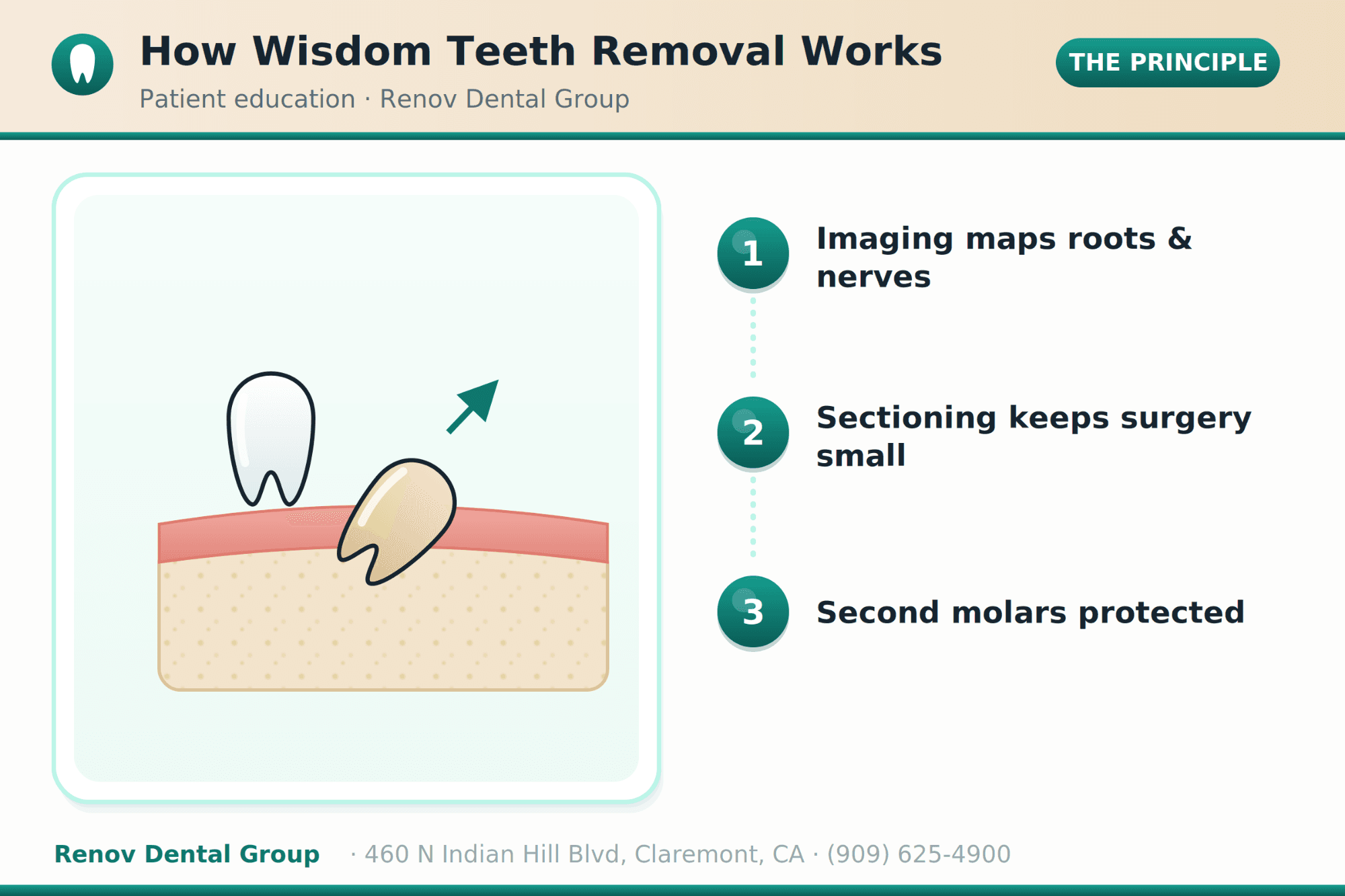
A simple extraction is used when the tooth is fully visible and easier to remove. Surgical removal may be needed if the tooth is impacted, broken, or partially covered by gum or bone.
What should I expect during recovery?+
Most patients have some swelling, soreness, and limited chewing for a few days. Recovery time varies, and following aftercare instructions can help support healing, but individual results and healing speed differ.
When should I call the office after surgery?+
Call the office if you have heavy bleeding, severe or worsening pain, fever, or swelling that becomes worse instead of better. These symptoms may need prompt attention.
Can I go back to work or school after wisdom teeth removal?+
Some patients return to light activities within a day or two, while others need more time depending on the complexity of the extraction and how they feel. It is best to plan for some downtime.
Will I need someone to drive me home?+
If sedation or anesthesia is used, you will usually need a responsible adult to drive you home. Your care team will let you know what to arrange before the appointment.
When Wisdom Teeth Removal Is Recommended
Wisdom teeth removal is commonly recommended when the teeth are impacted, partially erupted, difficult to clean, or contributing to pain, swelling, or infection. In some cases, removal may also be suggested to help protect nearby teeth and reduce the chance of future problems.
Not every wisdom tooth needs to come out. If the teeth are fully erupted, healthy, and easy to keep clean, monitoring may be appropriate instead. Your dentist will look at your symptoms, X-rays, and the position of the teeth before recommending treatment.
Because every mouth is different, the timing and complexity of treatment can vary. Some patients need a straightforward extraction, while others may need a more involved surgical approach.
Aftercare and Recovery
After wisdom teeth removal, your care team will give you instructions for managing swelling, keeping the area clean, and choosing foods that are easier to tolerate during healing. Recovery can vary from person to person, and some temporary soreness, swelling, or limited jaw opening is normal.
Following the recommended aftercare steps can help support healing, but side effects and complications can still occur. Contact the office if you notice heavy bleeding, worsening pain, fever, or symptoms that do not improve as expected.
Most patients are able to return to normal routines gradually, but the timeline depends on the complexity of the extraction and how your body heals.
Who Wisdom Teeth Removal Is For
Wisdom teeth removal may be appropriate for patients who have pain in the back of the mouth, swelling around the gums, repeated infections, food trapping, or crowding caused by the third molars. It may also be recommended when X-rays show that the teeth are impacted or likely to create future problems.
This visit is also helpful if you have been told your wisdom teeth are coming in at an angle, are only partially erupted, or are difficult to clean. A consultation can help determine whether monitoring or removal is the better option for your situation.
What’s Included in Your Wisdom Teeth Evaluation
Your visit typically includes an exam, a review of your symptoms, and imaging if needed to evaluate the position of the wisdom teeth and their relationship to nearby structures. Based on those findings, the dentist will explain whether removal is recommended and what type of extraction may be appropriate.
If treatment is needed, you will also receive guidance on preparation, aftercare, and what to expect during healing. The plan is tailored to your case, since the complexity of wisdom teeth removal can vary from patient to patient.
Important Notes and Limitations
Wisdom teeth removal is not the same for every patient. Some extractions are straightforward, while others are more complex and may require a surgical approach. Healing time, discomfort, and the need for follow-up care can also vary.
As with any procedure, side effects or complications are possible. Your care team will review relevant risks, aftercare instructions, and warning signs so you know when to contact the office. This information is intended to help you make an informed decision, not to replace an in-person evaluation.