Root Canal Treatment in Claremont
Last updated:
Root Canal Treatment in Claremont, CA
Root Canal Treatment in Claremont, CA
If you are looking for root canal treatment in Claremont, CA, Renov Dental Group can evaluate a painful or damaged tooth and recommend the right next step. Root canal therapy is often used when decay, infection, or trauma has reached the inner part of the tooth and the goal is to help preserve the natural tooth when possible.
This treatment may be appropriate for patients with lingering tooth pain, sensitivity that does not go away, swelling, or a tooth that has been cracked or injured. In some cases, similar symptoms can come from other dental problems, so a careful exam and X-rays are important before treatment is recommended.
At our Claremont office, we focus on a clear, step-by-step approach: we assess the tooth, explain the findings, review treatment options, and discuss what to expect during recovery. Root canal treatment can often relieve the source of discomfort, but results vary by case and some teeth may still need additional care afterward.
If you think you may need root canal treatment, contact Renov Dental Group to schedule an evaluation. Early care may help reduce the chance of further damage and make treatment more straightforward.
FAQ
How do I know if I actually need a root canal?+
Symptoms such as lingering pain, sensitivity to temperature, swelling, or pain when chewing can be signs of a problem inside the tooth, but they can also come from other dental issues. An exam and X-rays are the best way to determine whether root canal treatment is appropriate.
What happens during the procedure?+
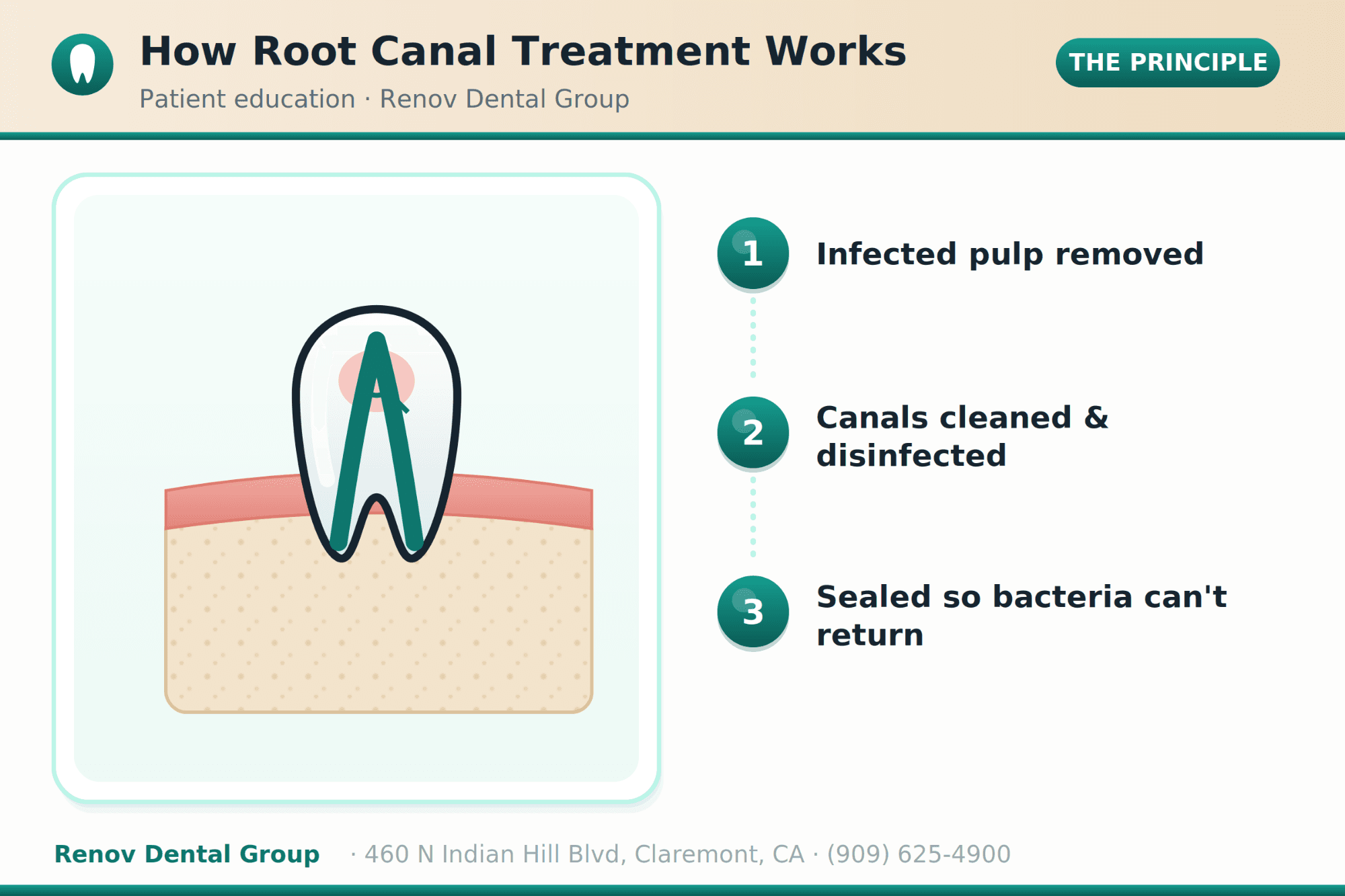
The dentist evaluates the tooth, numbs the area, removes the damaged or infected tissue from inside the tooth, cleans and shapes the canals, and then seals the tooth. In many cases, a follow-up restoration is needed to help protect the tooth.
Is root canal treatment painful?+
The procedure is typically performed with local anesthesia, so most patients feel pressure rather than pain during treatment. Some soreness or tenderness afterward is common and usually improves over time, but individual experiences can vary.
Will I need a crown after root canal treatment?+
Many back teeth need a crown or similar restoration after root canal treatment because the tooth may be more fragile. Your dentist will recommend the best option based on the tooth’s location, condition, and remaining structure.
How long does recovery take?+
Recovery varies from patient to patient. Some people feel back to normal within a few days, while others have mild tenderness for a bit longer. Following aftercare instructions and returning for the final restoration can help support healing.
What should I do if the pain gets worse after treatment?+
Mild soreness is common, but worsening pain, swelling, fever, or a bite that feels off should be reported to the office. These symptoms may need prompt evaluation to make sure the tooth is healing as expected.
Signs You May Need Root Canal Treatment
You may need an evaluation if you have lingering tooth pain, pain when biting, prolonged sensitivity to hot or cold, swelling around the tooth, or a tooth that has darkened after injury. These symptoms can also be caused by other dental problems, which is why an exam is important before treatment is recommended.
Other warning signs can include a pimple-like bump on the gums, pain that wakes you up at night, or discomfort that seems to come and go but keeps returning. Even if the pain is mild, it is worth having the tooth checked if the symptoms are persistent or getting worse.
If you are unsure whether the problem is urgent, it is usually better to schedule an evaluation sooner rather than later. Prompt care may help prevent the infection or damage from spreading and may improve the chances of saving the tooth.
Aftercare and What to Expect
After treatment, it is common to feel mild tenderness for a short time, especially when chewing. Your dentist may recommend avoiding hard foods on the treated tooth until the final restoration is placed. If swelling, severe pain, or other unusual symptoms occur, contact the office for guidance. Individual healing can vary, and some patients may need a little more time for the area to settle.
Most patients can return to normal daily activities soon after the appointment, but the tooth may still need a crown or other restoration to help protect it from future fracture or reinfection. Following the aftercare instructions closely can support healing, but it does not eliminate the possibility of temporary soreness or other post-treatment issues.
If your bite feels uneven, the tooth becomes more painful instead of less painful, or you notice swelling after the procedure, let the office know promptly so the area can be reassessed.
Who Root Canal Treatment Is For
Root canal treatment is typically considered for patients whose tooth has deep decay, infection, or trauma that has affected the inner pulp of the tooth. It may also be recommended when a tooth has persistent pain, swelling, or sensitivity that does not improve on its own.
Not every painful tooth needs a root canal. In some cases, the issue may be a cracked filling, gum problem, or another condition that needs a different approach. That is why a careful exam is important before any treatment plan is made.
If the tooth can still be saved, root canal therapy may be one option to discuss. If the tooth is too damaged, your dentist may review other treatment choices with you.
What’s Included in the Treatment Process
A typical root canal visit begins with an exam and imaging so the dentist can confirm the source of the problem. If treatment is recommended, the area is numbed and the inside of the tooth is cleaned, shaped, and sealed to remove infected or damaged tissue.
Depending on the tooth and the extent of the damage, treatment may be completed in one visit or may require more than one appointment. After the root canal, the tooth often needs a filling, crown, or other restoration to help protect it from future damage.
Your dentist will explain the recommended steps before treatment begins so you know what to expect.
Limitations and Important Cautions
Root canal treatment can often help preserve a natural tooth, but it is not the right solution for every case. If the tooth is too fractured, the infection is advanced, or there is not enough healthy structure left, another treatment may be more appropriate.
As with any dental procedure, there can be temporary soreness, sensitivity, or other post-treatment concerns. Healing time and comfort level can vary from person to person, and additional care may be needed if the tooth does not respond as expected.
If you have severe swelling, fever, or pain that worsens after treatment, contact the office promptly for reassessment.