Root Canal Treatment in Montclair
Last updated:
Root Canal Treatment in Montclair, CA
Root Canal Treatment in Montclair, CA | Renov Dental Group
If you are looking for root canal treatment in Montclair, Renov Dental Group in nearby Claremont offers endodontic care in a calm, patient-focused setting. Our office on N Indian Hill Blvd is about a 5-minute drive from Montclair via Central Avenue, making it convenient for patients who need timely evaluation and treatment.
Root canal treatment is used to address infection or inflammation inside a tooth and may help preserve the natural tooth when possible. If you are dealing with persistent pain, sensitivity, swelling, or discomfort when chewing, our team can evaluate the tooth and explain your options clearly.
We focus on careful diagnosis, comfortable treatment, and practical next steps for restoring the tooth afterward. If you think you may need a root canal, schedule a consultation so we can assess your symptoms and recommend the most appropriate care.
FAQ
How do I know if I need root canal treatment?+
Common signs include lingering tooth pain, sensitivity to hot or cold, pain when chewing, swelling, or a tooth that feels tender to touch. However, only an exam and imaging can confirm whether a root canal is needed.
What happens during a root canal appointment?+
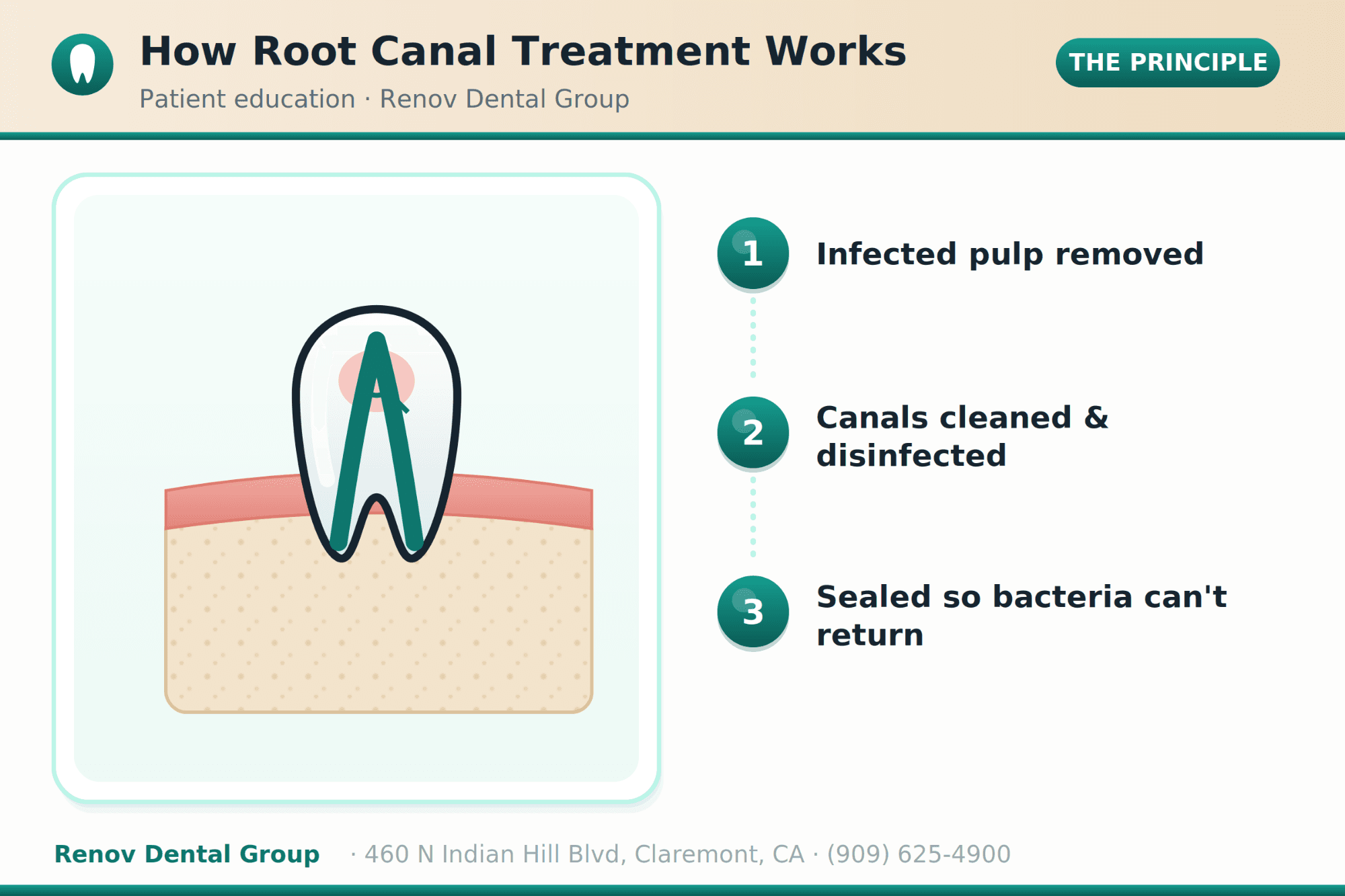
The tooth is numbed, the infected or inflamed tissue inside the tooth is removed, the canals are cleaned and shaped, and the space is sealed. In many cases, a follow-up restoration is needed to protect the tooth.
Is root canal treatment painful?+
The procedure is performed with local anesthesia, so most patients feel pressure rather than pain during treatment. Some soreness afterward is possible, and comfort can vary from person to person.
How long does recovery usually take?+
Recovery time varies depending on the tooth and the amount of inflammation present. Many patients notice improvement within a few days, but tenderness can last longer in some cases.
Will I need a crown after a root canal?+
Some teeth, especially back teeth, may need a crown after treatment to help protect them from fracture. Your dentist will recommend the right restoration based on the tooth’s location and condition.
Can a tooth still be extracted instead of treated?+
Yes. If the tooth is too damaged, cannot be restored predictably, or has a poor long-term prognosis, extraction may be discussed as an alternative.
What if I already had a root canal and the tooth hurts again?+
Persistent or returning symptoms may mean the tooth needs re-evaluation. In some cases, retreatment or another procedure may be considered depending on the cause.
What Root Canal Treatment Involves
Root canal treatment is designed to remove infected or inflamed tissue from inside the tooth and help preserve the natural tooth when possible. The procedure typically includes numbing the area, creating a small opening in the tooth, cleaning and shaping the canals, and placing a filling material inside the root space.
After the tooth is treated, it usually needs a final restoration such as a filling or crown to help protect it from future damage. The exact steps can vary depending on the tooth, the extent of infection, and whether additional treatment is needed. Your dentist will explain what to expect before treatment begins.
Who May Need Root Canal Treatment?
Root canal treatment may be recommended for patients who have ongoing tooth pain, lingering sensitivity, swelling around a tooth, or discomfort when chewing. It may also be considered when a tooth has deep decay, a crack, or trauma that has affected the nerve inside the tooth.
Not every painful tooth needs a root canal, which is why an evaluation matters. Your dentist will look at your symptoms, examine the tooth, and review imaging before recommending the next step.
Important Considerations
Root canal treatment can help preserve a natural tooth, but outcomes depend on the condition of the tooth, the extent of infection, and how the tooth is restored afterward. Some teeth may still need additional treatment, and in certain cases extraction may be the better option.
Temporary soreness, tenderness when biting, or mild swelling can occur after treatment, and recovery time may vary from person to person. If symptoms worsen, do not improve, or return after treatment, follow-up care may be needed. Your dentist will review these possibilities with you so you can make an informed decision.
Root Canal Treatment: What’s Included
Your visit may include a dental exam, digital imaging, and a discussion of your symptoms and treatment options. If root canal treatment is recommended, the procedure is planned around the affected tooth and the extent of infection or inflammation.
Care may also include guidance on pain management, aftercare instructions, and recommendations for restoring the tooth after treatment. Because every case is different, the exact steps can vary based on the tooth involved and whether additional restorative care is needed.
Schedule a Root Canal Evaluation in Montclair
If you are experiencing tooth pain or think you may need root canal treatment, the next step is an evaluation. A prompt exam can help determine whether the tooth can be saved and what treatment is most appropriate.
Renov Dental Group welcomes patients from Montclair and nearby communities who want clear answers and careful endodontic care. Contact our office to schedule a consultation and discuss your symptoms with our team.