Root Canal Treatment in La Verne
Last updated:
Root Canal Treatment in La Verne, CA
Root Canal Treatment in La Verne, CA
If you’re dealing with tooth pain, lingering sensitivity, swelling, or a deep cavity, root canal treatment may help save the tooth and address infection at its source. At Renov Dental Group, we provide root canal care for patients from La Verne and nearby communities who need a careful evaluation and a clear treatment plan.
This service is often recommended when the pulp inside a tooth becomes inflamed or infected. In many cases, treatment can relieve discomfort and help preserve the natural tooth, but results can vary depending on the condition of the tooth and how advanced the problem is. Some teeth may also need a crown or other restoration afterward to support long-term function.
Our team will review your symptoms, examine the tooth, and explain whether root canal treatment is the right next step or whether another option is more appropriate. If you are experiencing ongoing pain, swelling, or sensitivity, contact our office to schedule a consultation.
FAQ
How do I know if I need root canal treatment?+
Common signs can include lingering tooth pain, sensitivity to hot or cold, swelling, pain when biting, or a tooth that feels tender to the touch. A dental exam and imaging are usually needed to confirm whether the pulp inside the tooth is infected or inflamed.
Is root canal treatment painful?+
Root canal treatment is performed with local anesthesia to help keep you comfortable during the procedure. Some soreness or tenderness afterward is common, but it usually improves as the area heals. Your experience can vary depending on the tooth and the level of inflammation.
How long does recovery take after a root canal?+
Many patients feel better within a few days, but healing time can vary. Mild tenderness is common after treatment, especially when chewing on the area. Your dentist will let you know what to expect based on your specific case.
Will I need a crown after root canal treatment?+
In many cases, a crown is recommended after a root canal to help protect the tooth and restore strength, especially for back teeth. Whether you need a crown depends on how much natural tooth structure remains and the tooth’s location.
Can a root canal save every tooth?+
Not always. Root canal treatment can often help preserve a tooth, but the outcome depends on the extent of the infection, the amount of remaining tooth structure, and whether the tooth can be restored successfully. Your dentist will review the options with you.
What should I do if my tooth pain gets worse before my appointment?+
If pain, swelling, or fever worsens before your visit, contact the office as soon as possible. These symptoms may mean the tooth needs prompt evaluation, and your care plan may need to be adjusted.
What to Expect During Root Canal Treatment
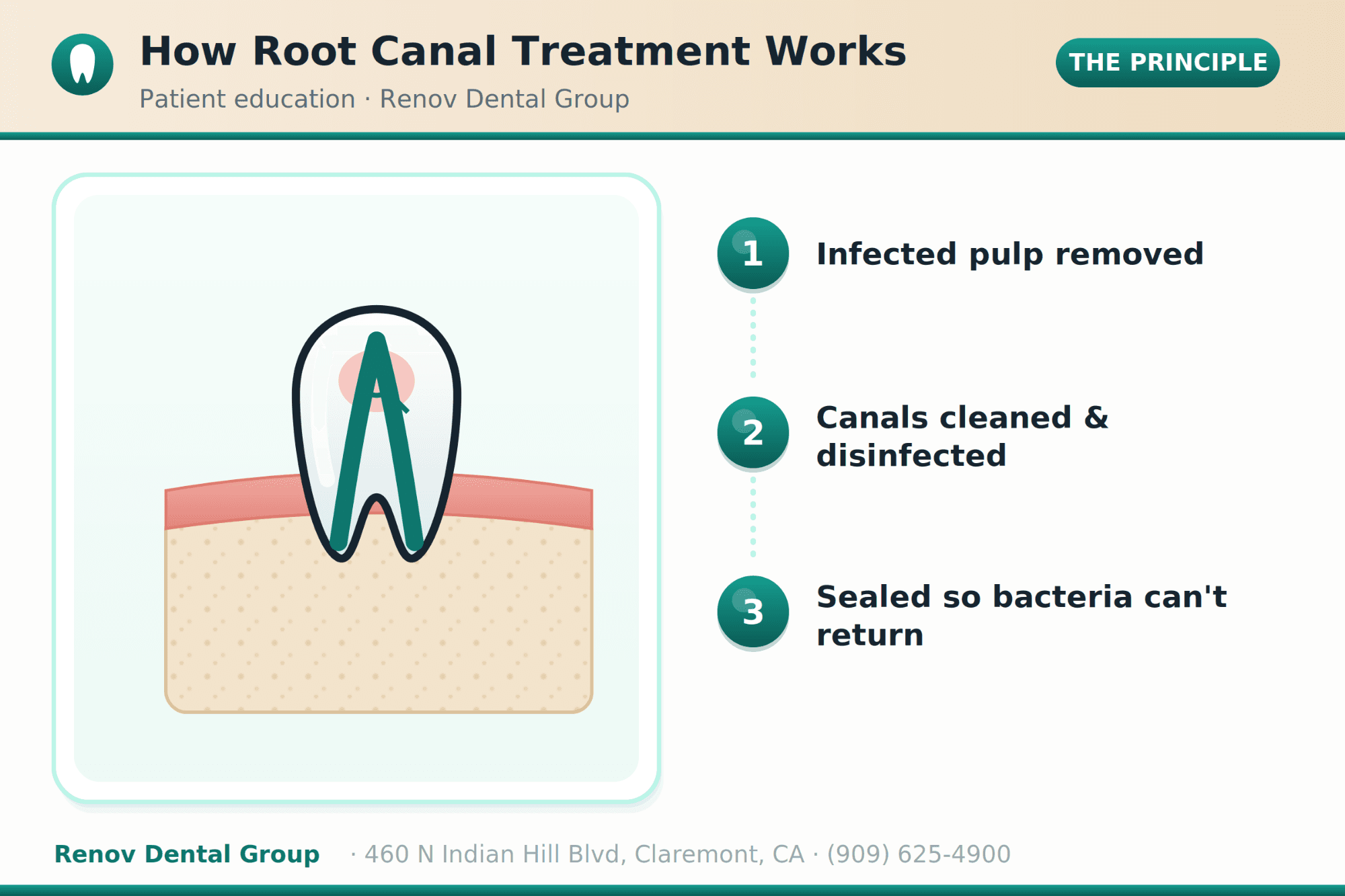
During a root canal appointment, the tooth is numbed for comfort, and the infected or inflamed tissue inside the tooth is removed. The inside of the tooth is then cleaned, shaped, and sealed to help protect it from further irritation.
The exact steps can vary based on the tooth, the severity of the infection, and whether the tooth can be treated in one visit or needs more than one appointment. After the root canal, a follow-up restoration such as a filling or crown may be recommended to help strengthen the tooth and restore normal chewing function.
If the tooth is severely damaged, additional treatment may be needed. Your dentist will explain the findings and review the most appropriate options before moving forward.
Aftercare, Healing, and When to Call Us
After treatment, it is normal to have some temporary tenderness or sensitivity as the area heals. Most patients can manage this with the aftercare guidance provided by the dental team, but recovery time can vary from person to person.
Try to avoid chewing on the treated tooth until your dentist says it is ready, especially if a permanent restoration has not yet been placed. Keep up with brushing and flossing as directed, and follow any medication instructions carefully.
If you notice worsening pain, swelling, fever, drainage, or a bite that feels off after treatment, contact the office for follow-up. These symptoms may indicate that the tooth needs additional evaluation.
Who Root Canal Treatment Is For
Root canal treatment may be recommended for patients who have symptoms of an infected or inflamed tooth pulp, including persistent pain, sensitivity that lingers, swelling, or discomfort when chewing. It may also be considered when a tooth has a deep cavity, a crack, or prior dental work that has not resolved the problem.
This treatment is not right for every case. Your dentist will evaluate the tooth, review imaging if needed, and determine whether root canal therapy, another restorative option, or extraction is the most appropriate choice.
What’s Included in Your Visit
A root canal visit typically includes an exam of the affected tooth, discussion of your symptoms, and treatment planning based on the condition of the tooth. If root canal therapy is recommended, the procedure generally involves removing the infected tissue, cleaning and sealing the tooth, and discussing whether a follow-up restoration is needed.
Your dentist will also review aftercare instructions and let you know what symptoms are normal during healing and which ones should be reported.
Limitations and Important Cautions
Root canal treatment can often help relieve pain and preserve a natural tooth, but results vary based on the severity of the infection, the tooth’s structure, and how well the tooth can be restored afterward. In some cases, additional treatment may be needed, and some teeth may not be suitable for root canal therapy.
Temporary soreness, sensitivity, or tenderness can occur after treatment. If you experience increasing pain, swelling, fever, or other concerning symptoms, contact the office for follow-up evaluation.