Root Canal Treatment in Upland
Last updated:
Root Canal Treatment in Upland, CA
Root Canal Treatment in Upland, CA
If you are dealing with a toothache, lingering sensitivity, swelling, or pain when chewing, root canal treatment in Upland may be recommended to help address infection or inflammation inside the tooth. At Renov Dental Group, we evaluate the tooth, review imaging, and explain whether endodontic treatment is the right next step for your situation.
This visit is focused on identifying the source of pain and helping preserve the natural tooth when possible. Because every case is different, treatment recommendations depend on the condition of the tooth, the extent of damage, and your overall oral health.
FAQ
How do I know if I might need a root canal?+
Common signs include lingering tooth pain, sensitivity to hot or cold, pain when chewing, swelling, or tenderness around one tooth. An exam and imaging are needed to confirm the cause.
Is root canal treatment painful?+
The procedure is performed with local anesthesia, so most patients feel pressure rather than pain during treatment. Some soreness afterward is possible and usually improves over time.
How long does recovery take after a root canal?+
Recovery varies by person and by the condition of the tooth. Mild discomfort may last for a few days, but your dentist will let you know what to expect based on your case.
Will I need a crown after root canal treatment?+
Many back teeth need a crown after root canal treatment to help protect the tooth from fracture. Whether a crown is recommended depends on the tooth and how much structure remains.
Can I take antibiotics instead of getting a root canal?+
Antibiotics may be used in some situations, but they do not remove infected tissue inside the tooth. Your dentist will determine whether root canal treatment or another approach is appropriate.
When should I seek urgent dental care for tooth pain?+
Seek prompt evaluation if you have swelling, severe pain, fever, trouble swallowing, or pain that is getting worse. These symptoms may indicate an infection that needs timely care.
What to Expect During Root Canal Treatment
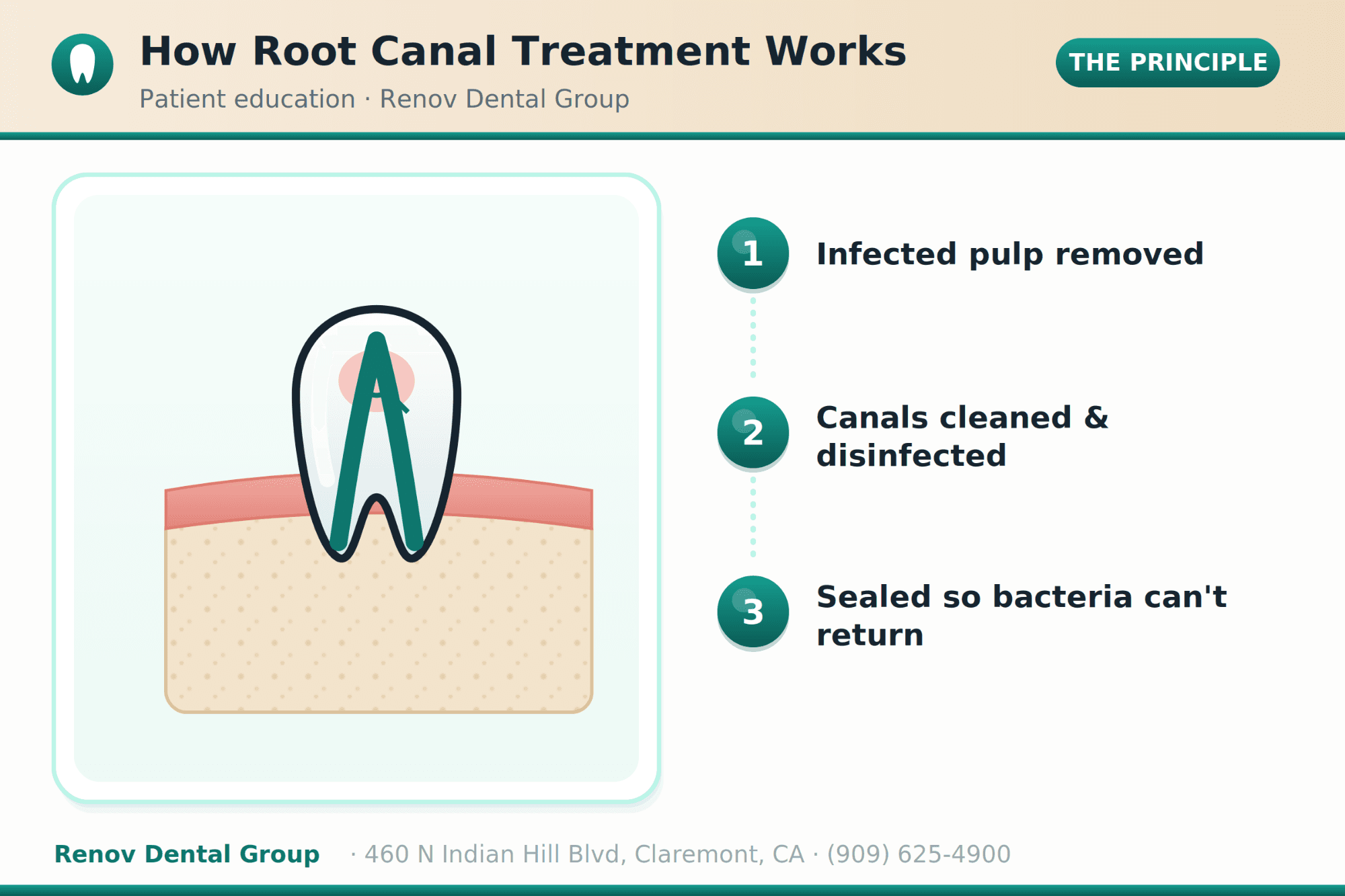
During a root canal visit, the dentist first evaluates the tooth and reviews imaging to confirm the source of the problem. After numbing the area, the infected or inflamed tissue is removed, the inside of the tooth is cleaned, and the canals are sealed.
Depending on the tooth and the extent of damage, the visit may also include a temporary filling or a plan for a crown at a later appointment. After treatment, we review home-care instructions, what level of soreness is normal, and when to contact the office if symptoms do not improve.
Who May Need Root Canal Treatment?
Root canal treatment may be recommended for patients with deep decay, a cracked or broken tooth, repeated dental work on the same tooth, or signs of infection in the pulp. It is also commonly considered when a toothache does not improve, when chewing causes pain, or when swelling develops around one tooth.
In some cases, a tooth may look normal on the outside but still have inflammation or infection inside. An exam and imaging help determine whether the tooth can be treated and preserved.
Important Notes and Limitations
Root canal treatment can help address infection or inflammation inside a tooth, but results vary by case. Some teeth may still need additional treatment afterward, such as a crown, and a tooth with significant structural damage may not be a candidate for long-term preservation.
Mild discomfort, sensitivity, or swelling can occur after treatment, and recovery time may differ from person to person. If pain worsens, swelling increases, or symptoms do not improve as expected, follow-up care may be needed.
Schedule an Evaluation in Upland
If you are experiencing tooth pain, swelling, or sensitivity that is not going away, the next step is an evaluation. Renov Dental Group can assess the tooth, review imaging, and explain whether root canal treatment is appropriate for your situation.
Contact our Upland office to schedule a consultation and get clear guidance on your symptoms, treatment options, and next steps.
What’s Included in a Root Canal Evaluation
A root canal evaluation typically includes a review of your symptoms, an exam of the affected tooth, and imaging when needed to check for infection or damage. The dentist may also test the tooth and surrounding area to help confirm the source of pain.
If treatment is recommended, the visit may include discussion of anesthesia, the procedure itself, temporary restoration options, and whether a crown or other follow-up care may be needed. The goal is to give you a clear plan based on your specific condition.