Root Canal Treatment in Pomona
Last updated:
Root Canal Treatment in Pomona, CA
Root Canal Treatment in Pomona, CA
If you are looking for root canal treatment in Pomona, Renov Dental Group in nearby Claremont offers endodontic care for patients with tooth pain, swelling, lingering sensitivity, or a suspected infection. Root canal treatment is often recommended when the inside of a tooth becomes inflamed or infected and the goal is to help preserve the natural tooth when possible.
Our office on N Indian Hill Blvd is a convenient option for Pomona-area patients who need an evaluation and a clear explanation of their treatment options. Because every case is different, the right approach depends on the tooth involved, the extent of damage, and whether the tooth can be restored predictably.
FAQ
How do I know if I need root canal treatment?+
Common signs include lingering sensitivity, pain when chewing, swelling, or a tooth that feels tender or looks darker than usual. However, only an exam can confirm whether root canal treatment is needed.
Is root canal treatment painful?+
Most patients receive local anesthesia, and the procedure is designed to relieve pain caused by infection or inflammation. Some soreness or sensitivity may occur afterward, and individual experiences can vary.
How long does recovery usually take?+
Recovery time varies depending on the tooth and the extent of treatment. Some patients feel better within a few days, while others may need a little longer for tenderness to settle.
Will I need a crown after root canal treatment?+
Some teeth do need a crown or other restoration after treatment to help protect the tooth and restore function. Your dentist will let you know whether that is recommended in your case.
What happens if the tooth cannot be saved?+
If the tooth is too damaged or cannot be restored predictably, extraction and replacement options may be discussed. The best choice depends on the tooth’s condition and your overall oral health.
When should I call the office after treatment?+
You should contact the office if pain worsens, swelling increases, or you notice anything unusual after treatment. It is always better to check in if you are unsure about your symptoms.
What Root Canal Treatment Involves
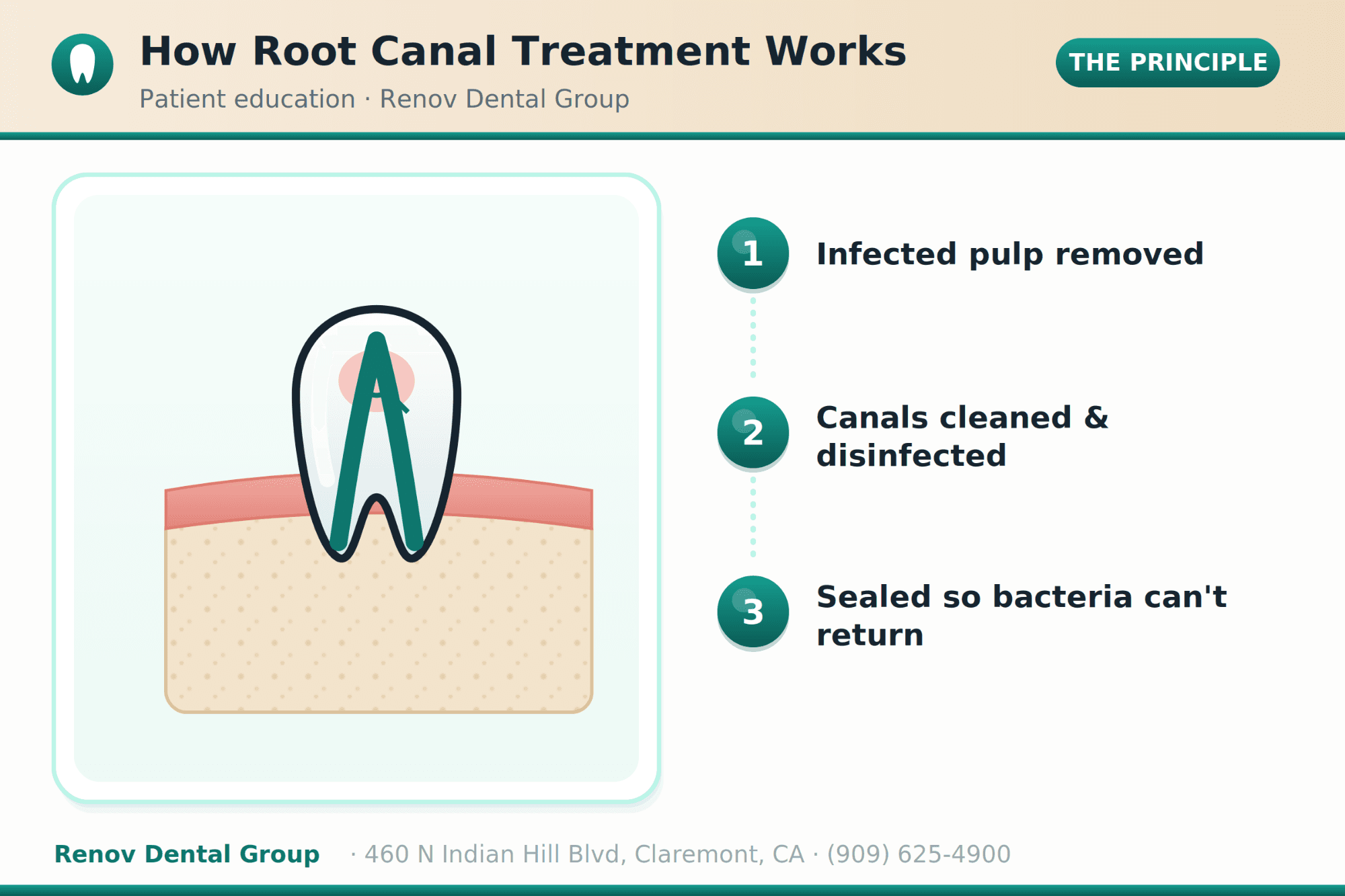
Root canal treatment focuses on removing infected or inflamed tissue from inside the tooth, cleaning the canals, and sealing the space to help reduce the risk of further infection. The exact steps can vary depending on the tooth, the extent of infection, and whether the tooth needs follow-up restoration.
In many cases, treatment includes an exam and imaging, local anesthesia, cleaning and shaping of the canals, and placement of a filling or temporary material. Some teeth may also need a crown or other restoration afterward to support long-term function. Your dentist will explain what is appropriate for your situation and what recovery may look like.
Schedule Your Root Canal Evaluation
If you are experiencing tooth pain, swelling, or sensitivity and want to know whether root canal treatment is the right option, contact Renov Dental Group for an evaluation. We can review your symptoms, examine the tooth, and discuss the next step based on your needs.
If treatment is recommended, we will explain the process, answer your questions, and review any follow-up care that may be needed. Call today to schedule a consultation and get a clear plan for your tooth.
Who May Need Root Canal Treatment
Root canal treatment may be recommended for patients who have persistent tooth pain, pain when chewing, prolonged sensitivity to hot or cold, swelling around the gums, or a tooth that appears darkened or damaged. It may also be considered when a tooth has deep decay, a crack, or signs of infection.
Not every toothache means a root canal is needed, so an evaluation is important. In some cases, the issue may be a cavity, a cracked filling, gum inflammation, or another problem that requires a different treatment plan.
Limitations and Important Considerations
Root canal treatment can help preserve a natural tooth, but it is not always the right solution for every case. If the tooth is too damaged, has advanced structural loss, or cannot be restored predictably, extraction and replacement options may need to be discussed.
As with any dental procedure, there can be temporary soreness, sensitivity, or other side effects, and individual results may vary. A thorough exam is the best way to determine whether root canal treatment, another restorative option, or a different approach is more appropriate.
Root Canal Treatment Options and Next Steps
After an exam, your dentist may recommend root canal treatment, another restorative procedure, or a different approach depending on the condition of the tooth. The goal is to choose the option that best fits the tooth’s health, your symptoms, and whether the tooth can be restored successfully.
If root canal treatment is appropriate, the office will explain the expected steps, any follow-up restoration that may be needed, and what to watch for during recovery.