Root Canal Treatment in San Dimas
Last updated:
Root Canal Treatment in San Dimas, CA
Root Canal Treatment in San Dimas, CA | Renov Dental Group
If you are looking for root canal treatment in San Dimas, Renov Dental Group in nearby Claremont offers endodontic care for teeth affected by deep decay, infection, or injury. Our office on N Indian Hill Blvd is about a 10-minute drive from San Dimas via the 210 freeway or Arrow Hwy, making it a convenient option for patients who want timely care close to home.
Root canal treatment is used to remove infected or damaged tissue from inside the tooth and help preserve the natural tooth whenever possible. Because every case is different, the recommended approach depends on the tooth involved, the extent of the problem, and whether a crown or other restoration is needed afterward.
If you are dealing with tooth pain, swelling, or sensitivity, a consultation can help determine whether root canal treatment is appropriate.
FAQ
How do I know if I need a root canal or just a filling?+
A filling may be enough if decay is limited to the outer layers of the tooth. A root canal is more likely when the pulp inside the tooth is inflamed or infected, which can cause lingering pain, sensitivity, swelling, or tenderness when biting. An exam and X-rays are usually needed to confirm the best treatment.
What symptoms can mean I need root canal treatment?+
Common signs include severe tooth pain, pain that lingers after hot or cold exposure, swelling around the tooth or gums, a pimple-like bump on the gum, or discomfort when chewing. Some teeth with infection may not hurt much at first, so symptoms can vary.
Is root canal treatment painful?+
The procedure is performed with local anesthesia, so most patients feel pressure rather than pain during treatment. Afterward, some soreness or tenderness is possible, and it usually improves over time. Individual comfort and recovery can vary.
How long does root canal treatment take?+
Treatment time depends on which tooth is involved, how complex the infection is, and whether the tooth needs additional steps. Some cases can be completed in one visit, while others may require more than one appointment.
Will I need a crown after a root canal?+
Many back teeth need a crown after root canal treatment because they handle more chewing force. Whether a crown is recommended depends on the tooth’s condition, location, and how much natural structure remains.
What should I do if pain or swelling gets worse after treatment?+
Some mild soreness can be normal, but worsening pain, increasing swelling, fever, or a bite that feels significantly off should be reported to the office. Your provider can determine whether the symptoms are part of normal healing or need follow-up care.
What to Expect From Root Canal Treatment
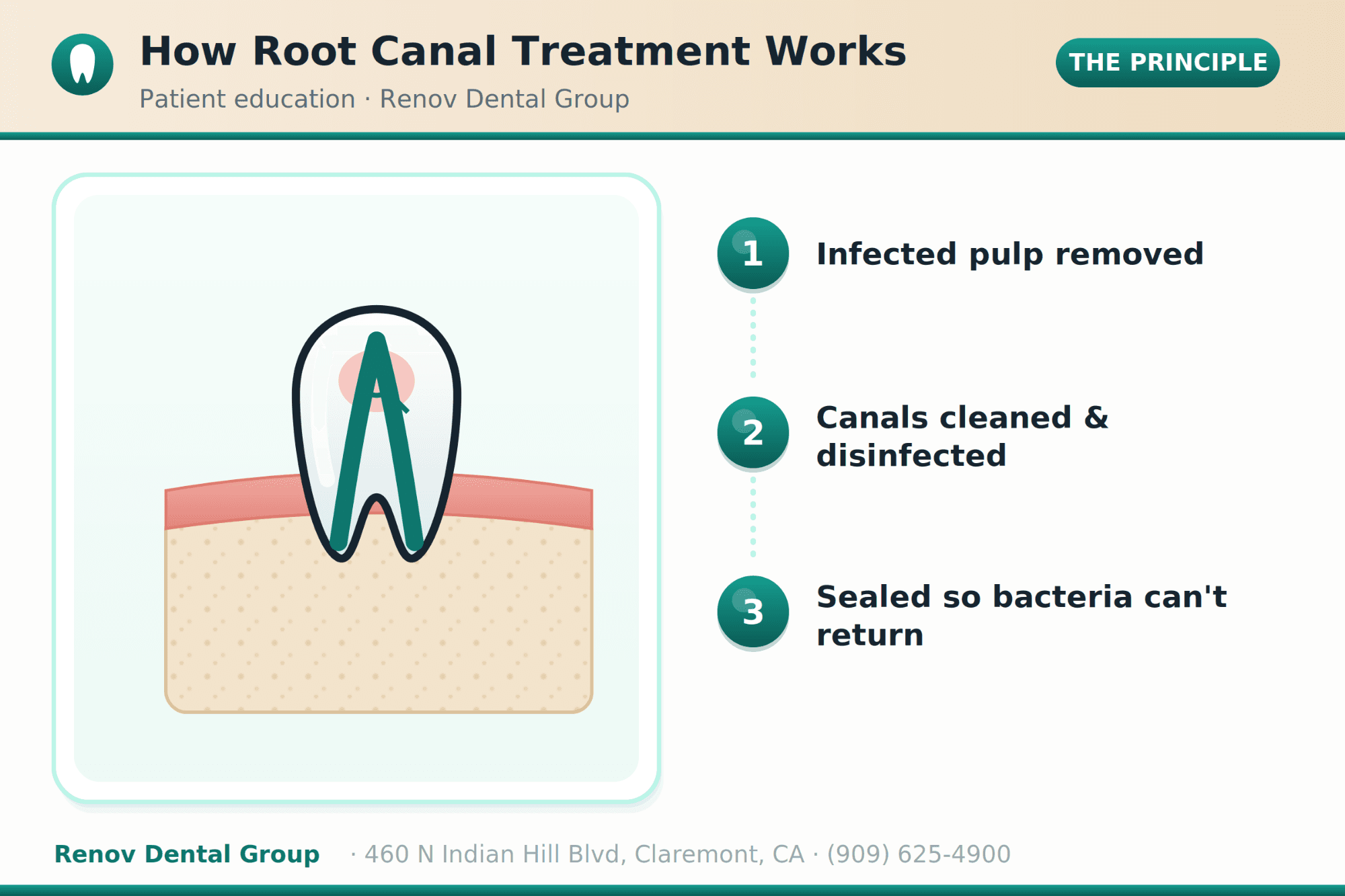
Root canal treatment is designed to remove infected or damaged tissue from inside the tooth and help preserve the natural tooth whenever possible. The exact steps can vary depending on the tooth, the extent of infection, and whether additional restorative work is needed afterward.
In many cases, the visit includes diagnostic imaging, numbing the area, cleaning and shaping the inside of the tooth, and sealing it to help reduce the risk of reinfection. Some teeth may need a temporary filling first, followed by a permanent restoration or crown at a later visit.
After treatment, patients are usually given home-care instructions and guidance on what level of soreness is normal. Because healing can vary from person to person, follow-up may be recommended to confirm that the tooth is responding as expected.
Who Is a Candidate for Root Canal Treatment?
Root canal treatment may be recommended for patients with deep decay, a cracked or injured tooth, repeated dental work on the same tooth, or signs that the pulp inside the tooth is inflamed or infected. It is often considered when the goal is to save the natural tooth rather than remove it.
Not every tooth can be treated predictably with a root canal alone. If the tooth has severe structural damage, advanced infection, or other concerns that affect long-term stability, additional treatment or extraction may be discussed. A dental exam and imaging help determine whether root canal treatment is the right option.
If you have ongoing pain, pressure when biting, or swelling, it is best to seek evaluation sooner rather than later.
Limitations and Important Cautions
Root canal treatment can help address infection inside a tooth, but results and recovery can vary from patient to patient. Some teeth may still require additional restoration, and in certain cases retreatment or extraction may be discussed if the tooth cannot be predictably saved.
Temporary soreness, tenderness when chewing, or mild swelling can occur after treatment. These symptoms are not the same for everyone and usually improve with time, but any worsening pain, persistent swelling, or unusual symptoms should be reported to the dental office.
Because every case is different, your dentist will review the expected benefits, possible risks, and next steps before treatment begins.
What’s Included in Your Root Canal Visit
A root canal visit typically begins with an exam and imaging to confirm the source of the problem. From there, the dentist reviews the tooth, explains the recommended treatment, and discusses whether the tooth may also need a crown or other restoration later.
Depending on the case, treatment may include local anesthesia, cleaning the inside of the tooth, disinfecting the canals, and placing a temporary or permanent seal. The goal is to address the infection while preserving the tooth when possible.
Your visit may also include aftercare instructions, medication guidance if appropriate, and a follow-up plan so the tooth can be monitored after treatment.
Schedule a Root Canal Consultation
If you are experiencing tooth pain, swelling, or sensitivity, do not wait for the problem to worsen. A consultation can help determine whether root canal treatment is appropriate and what next steps may be needed.
Renov Dental Group welcomes patients from San Dimas and nearby communities who want prompt evaluation and clear guidance. Contact the office to schedule an appointment and discuss your symptoms with a dental professional.